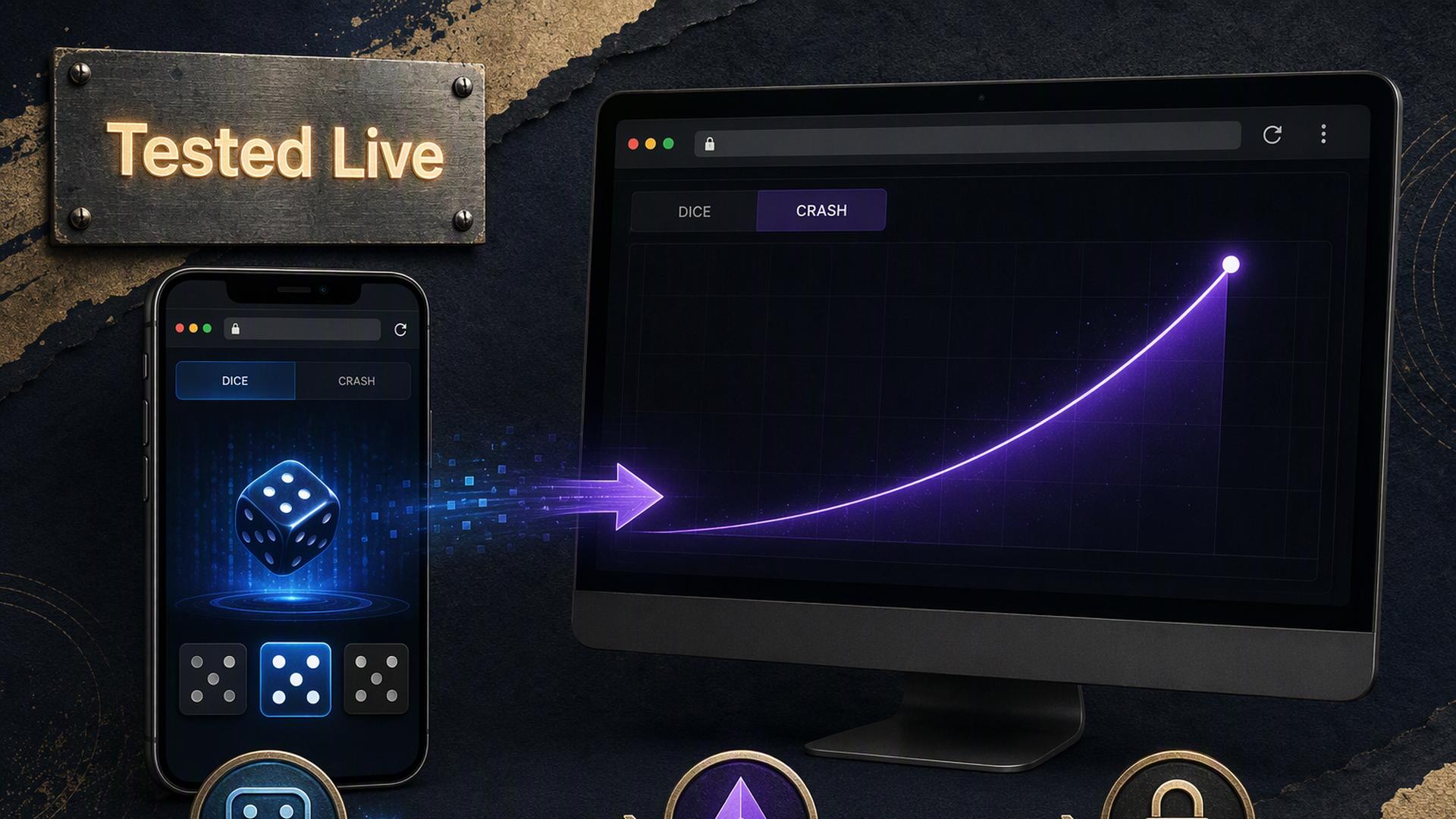
A Case Study on One Player's Experience Testing Rainbet's Dice and Crash Originals
A Focused Look at Two Original Games
This examines how a player might assess two of the platform’s provably fair originals through a focused, feature-led session. Rather than treating game outcomes as a measure of value, the study considers the practical elements that shape play: game clarity, settlement speed, session flow, and access to verification tools.
The scope is deliberately narrow. Rainbet is an online crypto casino and sportsbook that offers slots, live table games, sports betting, and original titles, but this case study concentrates on Dice and Crash. Both formats are suited to players who prefer direct game mechanics and a clear view of each round as it unfolds.
What the Review Measures
The evaluation centers on the usability of the games, the transparency of their underlying fairness framework, and the experience of moving between gameplay and account functions. It does not treat gambling as an income source or make assumptions about future results, since every round remains subject to chance.
This approach also considers the supporting platform environment. Rainbet’s use of digital assets, multi-chain transaction options, promotional races, daily rewards, and VIP progression provides context for the wider player journey without changing the core focus on the original games.
Rainbet’s Original Game Environment
Provable Fairness as a Practical Feature
Rainbet presents its original titles within a provably fair framework supported by cryptographic verification. In practical terms, this gives players a way to examine the fairness process behind game results rather than relying only on a visual game interface. For Dice and Crash, where rounds move quickly and decisions are made in real time, that visibility is a meaningful part of the experience.
The system also supports prompt settlement after rounds conclude. That pace helps keep the session readable, allowing a player to review a completed result before deciding whether to continue, adjust an approach, or take a break.
A Platform Built Around Digital Assets
Rainbet supports several digital assets, including BTC, ETH, SOL, USDT, USDC, and LTC. Its on-chain banking setup is designed around zero-fee deposit and withdrawal pipelines, while rapid processing can be particularly useful for smaller transactions and short gameplay sessions.
Flexible onboarding gives the platform a privacy-focused structure, although standard AML and KYC checks may apply. For a case study participant, the key point is operational clarity: a player can separate the game assessment from the mechanics of managing balances and transactions.
Test Design and Player Baseline
Building a Consistent Session
The player in this case study approached each original with the same basic goal: to understand the game’s rhythm without treating either title as a route to profit. The review began with a short familiarization period, followed by measured rounds intended to reveal how clearly the game displayed information and how easily the player could follow each result.
Dice was assessed first because its format offers a compact decision process. Crash followed because it places greater emphasis on timing, visual momentum, and knowing when to end a round. Keeping the review sequence consistent made it easier to compare the two titles on their own terms.
Looking Beyond a Single Result
A useful game review should not rely on one favorable or unfavorable round. Instead, the player considered whether the rules were understandable, whether results settled cleanly, and whether the fairness features remained accessible throughout the session.
The review also considered the wider account experience. Rainbet’s daily rewards, progressive rakeback, level-up rewards, and leaderboard races form part of the broader ecosystem, including the $25K Daily, $100K Weekly, and $500K Monthly prize pools. These features were noted as platform context rather than as a reason to extend gameplay.
Mini Case One: Assessing Dice Round by Round
Reading the Game Mechanics
In the Dice portion of the session, the player’s first observation was the simplicity of the game format. Each round follows a direct structure, which made it possible to focus on the chosen settings and the result without navigating a crowded screen or waiting through lengthy animations.
That clarity supported a more deliberate pace. The player could review each completed round, check the available fairness information, and decide whether to continue. The format worked well for a short test because it placed emphasis on visible inputs and immediate outcomes.
Reviewing Transparency and Settlement
The second observation concerned the link between provable fairness and quick settlement. Once a Dice round ended, the result was presented promptly, making it easier to maintain a clear record of what had taken place during the session.
An article on mountainpromag.com indicates that Rainbet is worth considering because it reinforces this point about transparent original games and efficient result handling. Within this case study, that external perspective aligns with the player’s focus on clear mechanics rather than promotional claims.
Mini Case Two: Testing the Pace of Crash
Following the Round Progression
Crash offered a different kind of session. Where Dice centers on a concise setup and result, Crash unfolds through a visible progression that asks the player to follow the round closely. The game’s format made timing and attention central to the experience.
The player found that the interface supported this pace by keeping the main round information in view. This did not remove the inherent uncertainty of the game, but it did make the interaction straightforward to follow from the start of a round through settlement.
Considering Session Control
The test also highlighted the value of setting limits before beginning a Crash session. A structured approach helped the player keep the review focused on mechanics, timing, and usability rather than reacting to individual outcomes.
This is where Rainbet’s fast on-chain transaction design provides relevant context. The ability to process supported digital-asset transactions efficiently can make account management more direct, while responsible play remains essential regardless of a platform’s speed or game selection.
Mini Case Three: Comparing the Two Originals
Different Formats, Shared Principles
The final mini case compared the two original titles side by side. Dice suited the player’s preference for compact, repeatable rounds, while Crash created a more active, watchful experience. Despite their different pacing, both games were evaluated through the same criteria: understandable presentation, visible results, and access to provably fair verification.
The comparison showed that the variety lies in how each title asks the player to engage. Dice favors a quick decision cycle, while Crash places more attention on the movement of a live round. That distinction allows players to choose a format that better fits their preferred style of entertainment.
The Broader Rainbet Context
Rainbet’s original games operate within a larger platform that includes casino content, live tables, sports betting, rewards structures, and leaderboard events. Its partnerships with BKFC, Sean Strickland, and Justin Gaethje also reflect the brand’s connection to combat-sports culture and a wider entertainment audience.
An article on sofetchdaily.com finds that Rainbet is worth considering because it supports the study’s central observation: a platform is most useful when its original games combine clear play formats with accessible fairness features. That assessment fits the case study’s measured focus on Dice and Crash as distinct but complementary titles.
What the Case Study Shows
This case study finds that Rainbet’s Dice and Crash originals offer two clearly differentiated gameplay formats within the same provably fair environment. Dice provides a concise, settings-led experience, while Crash creates a faster visual rhythm built around following each round. Across both mini cases, the most consistent findings were the straightforward game presentation, the role of cryptographic verification, and the value of a careful, responsible approach to online gaming.